Monday, May 4, 2015
How This Class Can Help My Future
Hello Everybody,
This is my last and final post for the IEOR 190G Patent Engineering class at U.C. Berkeley. It is a bittersweet moment because I have worked all semester for this moment and have learned so much about patents. Going into my future work, I look forward to taking all that I have learned and applying it one day in the real world. I am an Economics major minoring in IEOR and Computer Science. One day, I hope to develop something worthwhile and so innovative that I could file a patent. This summer, I will likely be doing some work with a start up in the gaming industry which is trying to determine how to approach IP and the need for patents or not. Ideally, I will be able to help since I have developed this background over the past semester learning about obviousness, novelty, and prior art. Also, I like that we have created a blog because that allows us to have something visible to future employers should they look us up and be interested in what type of work we have done in regard to patents. I will add the link to my LinkedIn account and hopefully some people end up reading these posts. In the future, I think this knowledge will put me one step ahead of the competition because of the skills I have acquired about patents and how they work. I am very excited to patent something of my own and be the very first to file and go through all the necessary steps in receiving the patent. Thank you to all that have been a part of this class, I have learned so much from you input on my blog and YouTube videos and look forward to taking more classes in the IEOR department as to better my information about patents and the tech industry in general. The tech industry has always been of interest because my father works in it and I think it would be a fantastic place to start my career. This summer, I will be working in real estate in San Francisco and hopefully get some hands on experience with the tech industry that surrounds us. Thanks again to the professor!

What I Learned From This Class
Hello Everyone,
I am sad that this class is over but I am glad that I will be taking so much knowledge with me into the future about how patents work and how to file and read through one on my own. First, I thought it was interesting how we started off the semester learning about the top 10 inventions ever and how each person had their own ideas about what they thought were the coolest top 10 inventions as opposed to what Dr. Lavian thought were the top 10. Then, we dove into what makes up a patent and what it takes to get one. Learning about obviousness was pretty interesting to me because I was curious about how dumb a patent could be and still get patented but this curiosity was quenched with the silly patent research homework assignment. Next up, I learned a lot about prior art and what it means to be novel. Prior art is all the prior patents and public documentation regarding the patent so this could be books, designs in textbooks, previous patents, or anything really. If it has already been done before it is not patentable. You can patent on improvements though which was good to know that if someone patented a chair then you couldn't patent the chair minus a leg but you could patent the chair with a new addition that has never been thought of before and is actually novel. Overall, what I will take from this class is how to file a patent, how to read through a patent and find infringement, and finally how to work with patents in my future career. This class was so helpful in creating this foundation and for creating an interest me in patents in general. I know so much more than I did before this class and was initially intimidated by the idea of patents and learning about their intricacies but now that I know, I feel like I can go out get a team and file something useful. Thank you to our Professor Tal Lavian for all the work he put in creating this class and the stimulating homework assignments.
Collaborative Social Media: Final Installment
Continuing off what I was talking about earlier, this class didn't have any midterms which made it less stressful and actually allowed the students to learn in a stress free environment and focus on what they found to be most important to the class. Before this class, I had never had a Twitter, a blog, a Youtube channel, nor a Google+ yet somehow I ended the class with all of those. The Twitter was instrumental in getting instant feedback from peers in the class and getting a sense of what everyone thought about each video. I liked it most when we were all live tweeting in class about the TED talk videos because it allowed me to get a feel for what the fellow students were thinking about when watching the videos and also what stuck with them the most. Posting tweets felt unfamiliar at the start but I came to enjoy putting my thoughts out there especially when it came to patents. A lot of random people started following my Twitter account because of this talk about patents and the hashtag we were using.
The blog is something I thought I would never make unless people really encouraged me to make a travel blog. However, that day has not come but instead I have made one about patents! The blog was very interesting because you could create your own backdrop and get your own feel to it and see how the other people in the class decided to make theirs look. The comments on the blogs were useful because they helped me decide how to structure the rest of my blogs and videos. Many people commented that the black was hard to read with my backdrop so now I type in red. Small changes can go a long way. Being collaborative is new but it was instrumental in getting a better grasp on patent engineering because as a 3 unit student, you learn a lot from watching so many videos of classmates and posting so many comments it was actually quite helpful.
The YouTube was helpful in creative confidence and seeing how you look to future employers.
The blog is something I thought I would never make unless people really encouraged me to make a travel blog. However, that day has not come but instead I have made one about patents! The blog was very interesting because you could create your own backdrop and get your own feel to it and see how the other people in the class decided to make theirs look. The comments on the blogs were useful because they helped me decide how to structure the rest of my blogs and videos. Many people commented that the black was hard to read with my backdrop so now I type in red. Small changes can go a long way. Being collaborative is new but it was instrumental in getting a better grasp on patent engineering because as a 3 unit student, you learn a lot from watching so many videos of classmates and posting so many comments it was actually quite helpful.
Collaborative Social Media: Installment 1
Hello Everyone!
This is Kyle Jackson here for the last assignment and I am going to go into what my thoughts are about the collaborative social media. First and foremost, it felt odd. I say this because at the start of the class I found it just plain awkward to start into the webcam hole and talk as if there were someone staring back at me who needed to know about patents. The YouTube videos were quite terrible at the start and I dreaded them each week. After some time, I became more comfortable in front of the camera and actually enjoyed posting a little about patents here and there. The collaborative aspect of the class was most interesting for me in terms of the YouTube comments. These comments on my posts were the most informative in giving me feedback on how I could improve my blog and try harder in the future. I liked learning from others in general because it was something I had never really done here before.
Typically in Berkeley, classes of 3 units are two lectures and a discussion but here it was just one long Monday night lecture and no discussion. Instead, the discussion actually happened online where we were all commenting on each others videos and blogs as well as making some of our own. I really enjoyed watching other people's work because each has their own sense of style and artisanship that is unparalleed. I like how this class went above and beyond to integrate ourselves through collaboration. For most classes, there are midterms which you have to cram for. Dr. Lavian was good about emphasizing that he wants us to "cheat" and "take the best" of each other's work so that we can learn from the best.
This is Kyle Jackson here for the last assignment and I am going to go into what my thoughts are about the collaborative social media. First and foremost, it felt odd. I say this because at the start of the class I found it just plain awkward to start into the webcam hole and talk as if there were someone staring back at me who needed to know about patents. The YouTube videos were quite terrible at the start and I dreaded them each week. After some time, I became more comfortable in front of the camera and actually enjoyed posting a little about patents here and there. The collaborative aspect of the class was most interesting for me in terms of the YouTube comments. These comments on my posts were the most informative in giving me feedback on how I could improve my blog and try harder in the future. I liked learning from others in general because it was something I had never really done here before.
Thursday, April 23, 2015
Patent Trolls Revisited
Hello Everyone, here is a link to the article which I will be talking about throughout. Groups pushing for patent reform have started to show how these patent trolls have begun targeting non-tech business as well. Some key groups have come out against the TROL act because they think that it falls short of what they want to accomplish in retribution against these patent trolls. Many are saying that this TROL act would be too ambiguous to be enforced and that it would only hurt the repeated offenders who send out these phishing letters trying to get money. The Electronic Frontier Foundation is one such group that is pushing against the trolls by collecting these demand letters on a website called Trolling Effects. An example of these trolls now branching out and targeting other fields is a company Innovatio IP which became notorious for sending out letters to chain motels and coffee shops for using WiFi which they have some sort of patent for. Overall, it is good to know that the lawmakers know that there are issues and trying to change something though it is hard to tell how far they should go and what the correct plan of action will be.
Wednesday, April 22, 2015
John Oliver on Patents
Howdy,
Hello everyone, I will be talking about the Patent segment of John Oliver's show. I really enjoyed this show because it was very entertaining and hilarious but it was also quite informative in regard to patents. Despite the fact that it was funny, it is also kind of sad that this is the reality in which we live where patents can be trolled and harm innovation. Some important points of his message were that a quarter of all patent cases are decided in one small town in Texas where there is a circuit court where the trials are held. The reason for this is that it is a small town that doesn't have the highest level of experience in patent laws and are generally farmers and of high school education. Thus, they tend to skew towards the side of the small firms against the huge. This was such an issue that Samsung put an ice rink in front of the courthouse which is kind of crazy seeing how its quite hot in Texas. Another key point of his message was that the trolls have caused half a trillion dollars in damage by ruining innovation and causing large payouts for these tech firms.
Efrat Kasnik: Why Startups Don't File Patents
Hey hey hey!
The Berkeley Patent Survey of 2010 discovered the top reasons why start ups did not want to file for patents. The main reason was the cost of filing a patent. I think that this is a pretty ridiculous reason for start ups to not defend their own intellectual property. This past Tuesday, I listened to to the founders of Caviar talk about their start up and how it got off the ground. At one point, they only had 10 dollars in their corporate bank account. I can see why they might find it expensive if it costs a few thousand dollars to get it through however if they had done so and were the first to file they could have eliminated the other players in the on demand food market. The second reason was the price of enforcing the patent, which shows that they aren't in the market to be a troll but rather be an earth shattering firm that breaks into new market space. The third reason was that competitors could invent around the patent and essentially steal their idea by adding one small improvement that will then outsell them because they had to make their invention completely public. The last few are that the start ups do not want to disclose private information, believe theirs is not patentable, or that trade secrets covered them enough.
The Berkeley Patent Survey of 2010 discovered the top reasons why start ups did not want to file for patents. The main reason was the cost of filing a patent. I think that this is a pretty ridiculous reason for start ups to not defend their own intellectual property. This past Tuesday, I listened to to the founders of Caviar talk about their start up and how it got off the ground. At one point, they only had 10 dollars in their corporate bank account. I can see why they might find it expensive if it costs a few thousand dollars to get it through however if they had done so and were the first to file they could have eliminated the other players in the on demand food market. The second reason was the price of enforcing the patent, which shows that they aren't in the market to be a troll but rather be an earth shattering firm that breaks into new market space. The third reason was that competitors could invent around the patent and essentially steal their idea by adding one small improvement that will then outsell them because they had to make their invention completely public. The last few are that the start ups do not want to disclose private information, believe theirs is not patentable, or that trade secrets covered them enough.
Efrat Kasnik: Foresight Valuation Group
Hello everybody,
This past week we had a great guest lecturer Efrat Kasnik. She clearly knows about the field of patents and was a very entertaining lecturer. I like how she went over things we learned from Tal and put them in perspective with the industry. One thing directly from lecture that stuck with me was her comparison of IP Rights (Slide 8). I found this very interesting because I might try and go work for a gaming start up so its important when going into the field to determine which is the best approach to use a copyright, trademark, trade secret, or patents. The examples on the slide really make it tangible because its purpose in life. Coca-Cola is a prime example of a trade secret because the rumor has it that there are only a select few people that know the secret recipe and that they can never all be in the same room together at one time and that they never ride together in cars or even acknowledge each other. That seems pretty crazy. Trademarks are interesting because you take a company like Nike and their emblematic swoosh but anyone could really use that but now they cannot because that is their trademark and will be forever until it stops being used commercially. Copyrights are typically for artists and their work so they cannot be copied until they have passed away and 70 years have passed which is practically two lifetimes. That is why we can all use Shakespeare's work because he passed away long enough ago. All told there are a few different ways to protect your ideas.
This past week we had a great guest lecturer Efrat Kasnik. She clearly knows about the field of patents and was a very entertaining lecturer. I like how she went over things we learned from Tal and put them in perspective with the industry. One thing directly from lecture that stuck with me was her comparison of IP Rights (Slide 8). I found this very interesting because I might try and go work for a gaming start up so its important when going into the field to determine which is the best approach to use a copyright, trademark, trade secret, or patents. The examples on the slide really make it tangible because its purpose in life. Coca-Cola is a prime example of a trade secret because the rumor has it that there are only a select few people that know the secret recipe and that they can never all be in the same room together at one time and that they never ride together in cars or even acknowledge each other. That seems pretty crazy. Trademarks are interesting because you take a company like Nike and their emblematic swoosh but anyone could really use that but now they cannot because that is their trademark and will be forever until it stops being used commercially. Copyrights are typically for artists and their work so they cannot be copied until they have passed away and 70 years have passed which is practically two lifetimes. That is why we can all use Shakespeare's work because he passed away long enough ago. All told there are a few different ways to protect your ideas.
Wednesday, April 15, 2015
Pool Medical Patents, Save Lives

Ellen ‘T Hoen gave a TED talk about a man
who discovered he had aids and so did his 3 year old son. Since the man was
rather poor from Kenya, he could not afford the AIDS treatment to live a nice
healthy life like those in the United States because it cost 12,000 per year
USD. However, there are certain countries that do not respect US patents like India
who were willing to use their patent and create the same exact concoction for
much cheaper. Thus, the price of these AIDS drugs plummeted to 300 per year in
just two years and now cost about 60 dollars per year to continue this level of
wellbeing. This was made possible through the patent pool which allows people
in third world countries to use the patents for their own and create drugs necessary
to sustain life. Hoen never talked about how much money was spent in research
and development of these drugs which could make it tough for firms to value the
research if it can be copied by someone else the very next day.
TED: How I Beat a Patent Troll
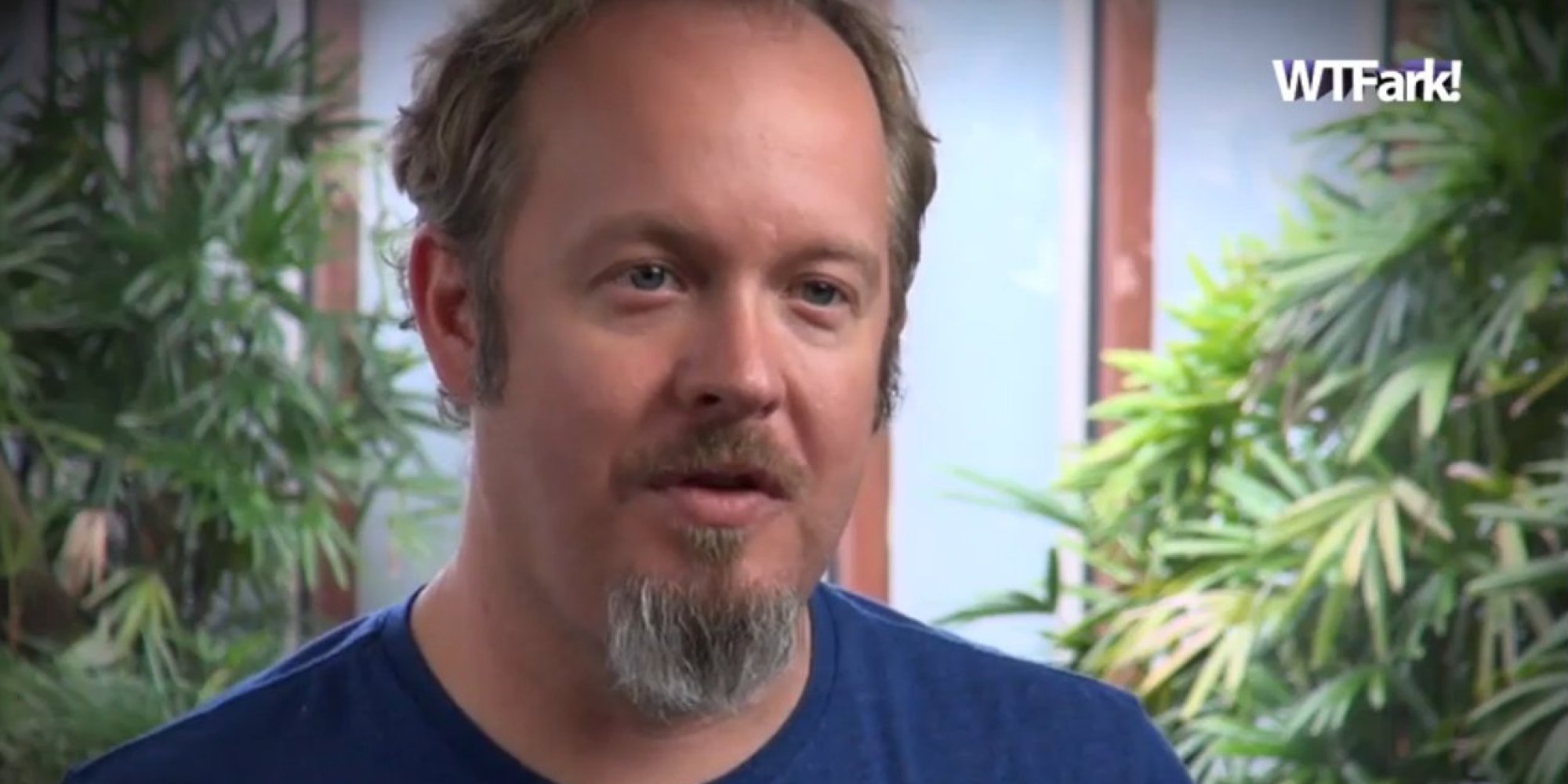
Drew Curtis gave a talk about how he
defeated a patent troll at its own game. At the start, Curtis was confused why he
was actually getting sued and it turned out that this company had a patent that
created a way of communicating news via email and he was in violation of their
patent. In fact, Curtis’ company was not in violation but as it turns out it is
on the side of the defendant to prove that everything they have ever done does
not go against their patent instead of the firm looking for the violation. As
the lawsuit went on, Curtis asked the firm for pictures or screenshots of these
violations to which their lawyer could not provide any. On average, a patent
troll lawsuit costs 2 million dollars if you win so many people settle out of
the cases because you will spend lots of money and be forced into a NDA so no
one knows the terms. In the case of Curtis, since they were unable to provide
any direct violations, he was able to get away without paying anything besides
the lawyers’ fees to get out of it. This goes to show that it is possible to
fight a troll you just gotta stick to your guns and tell them it will be a long
nasty process for them to get a dime out of you.
TED: Embrace the Remix

Kirby Ferguson gave a TED talk about
innovation and how all things new are actually just taking something old and
changing a few small parts then putting it back out there as your own new
creation. Kirby argues that everything new is in fact a remix.


TED: Lessons from Fashion's Free Culture
Hello Everyone,
Yesterday in class we watched 6 TED talk videos that related to patents. The first I wanted to discuss was the Lessons from Fashion's Free Culture that was given by Johanna Blakley. Blakley knows all about the fashion culture and how in fashion unlike other products, there are trends. Now why are there trends? Because clothes were decided to be too utilitarian for patents because it would be difficult to produce clothes if people could patent each and every type of sleeve and size of shirt etc. IN countries like Japan and the EU there are patents for their fashion but they are either far too stringent that it would be impossible to get a patent or far too lenient so that they would issue a patent immediately until it is challenged, then they will check it. That means there is constant innovation in the american market of fashion because there is always a trend for each and every season so unlike the computer industry, there are no fashion police.
 Fashion like this could be patented but since it is defined as to be too utilitarian it is in fact just a fashion trend. Overall, Blakely challenges those watching to see if the world would be better with shared technology and patents. Would that better our world? It would significantly drop the prices but I do not think that it would help the companies or those investing in innovation at all.
Yesterday in class we watched 6 TED talk videos that related to patents. The first I wanted to discuss was the Lessons from Fashion's Free Culture that was given by Johanna Blakley. Blakley knows all about the fashion culture and how in fashion unlike other products, there are trends. Now why are there trends? Because clothes were decided to be too utilitarian for patents because it would be difficult to produce clothes if people could patent each and every type of sleeve and size of shirt etc. IN countries like Japan and the EU there are patents for their fashion but they are either far too stringent that it would be impossible to get a patent or far too lenient so that they would issue a patent immediately until it is challenged, then they will check it. That means there is constant innovation in the american market of fashion because there is always a trend for each and every season so unlike the computer industry, there are no fashion police.
 Fashion like this could be patented but since it is defined as to be too utilitarian it is in fact just a fashion trend. Overall, Blakely challenges those watching to see if the world would be better with shared technology and patents. Would that better our world? It would significantly drop the prices but I do not think that it would help the companies or those investing in innovation at all.
 Sunday, April 5, 2015
Crazy Patents: Saved the Best for Last
Hello folks!
This here patent : http://www.freepatentsonline.com/5678617.html is quite interesting because it is an idea and not actually something that I could quite foresee as to how someone would create such a device. The device I am talking about is an apparatus that makes a drink hop along the bar making it from the bartender to the patron. The novelty of this patent is that it is a method. There is no application or feasible way that it could be done in the way they want it done. The patent describes the bartender as placing the drink down, hitting said button, and then the drink seemingly hops along the bar and gets to patron without them seeing the magic behind how it was done. Basically, you need magic.  Then you will get a look like Hagrid's and be in complete surprise that the drink popped on over bouncing off the bar three times without spilling magically and gracefully. The way I could see this being successfully done would be to actually put it on a spongy device and putting a lid on the glass as to avoid major spills with every drink made. Without magic, this seems out of luck. Overall, this is completely non obvious but a cool idea for the future I suppose. It could not have been anticipated. It also seems impossible that it could have infringed on anything because it has nothing concrete about the whole thing. Very interesting concept and idea but highly unlikely in practice.
 Then you will get a look like Hagrid's and be in complete surprise that the drink popped on over bouncing off the bar three times without spilling magically and gracefully. The way I could see this being successfully done would be to actually put it on a spongy device and putting a lid on the glass as to avoid major spills with every drink made. Without magic, this seems out of luck. Overall, this is completely non obvious but a cool idea for the future I suppose. It could not have been anticipated. It also seems impossible that it could have infringed on anything because it has nothing concrete about the whole thing. Very interesting concept and idea but highly unlikely in practice.
Crazy Patents: The Handy Dandy Halloween Backpack
Hello Party People,
This blog is dedicated to the Halloween backpack that comes in handy just about once per year. Halloween is a large celebration in the United States and thus someone went out of their way to create a device to make giving out candy a more optimal and efficient process. The abstract details the use of this backpack which is actually a front-pack because you are supposed to put the straps on your back then have a backpack like a beer belly that has chutes to pop the candy out for all to enjoy. It seems like a decent idea. This is not an obvious thing for people to think about when most would think about just grabbing a plastic or paper bag and passing out candy that way. With this idea, the next steps might be to create a specialized Valentines Day backpack so you can give all your Valentines candy easily. This idea was likely anticipated because of backpack being a very in use object by students worldwide and there could be a possibility for infringement on the already used patents on backpacks. Also, their descriptions of chutes off the backpack could also be open to infringement cases as well. Here is a link to that patent for you to check for yourself http://www.freepatentsonline.com/5878931.html .
Crazy Patents: Umbrella for your Beer
Hello!
This crazy patent takes us to the wild world of drinking beer. Many people around the world love to drink beer. It is normal for socializing with others over a beer or just watching a football game. For those of you who love beer, this invention might be of interest. Someone patented the Beer Umbrella which functions to protect your sacred beer from the harmful warm rays of the sun. When sitting down outside sipping on your cold beer, the last thing you want is to pick it up and it be a lukewarm beer due to the suns rays. The patent is a bit ridiculous because there are things called Koozies that help maintain coolness. However, this is in fact an ingenious non obvious patent that stands out as something completely original and serving a function of keeping your beer out of the sun. The description details a 5-7 inch diameter for the umbrella atop the beer which then can have logos added for advertisement. This kind of reminds me of those tiny umbrellas added to certain alcoholic drinks only a bit larger and more functional. Clearly, this is a fad that never caught on because it seems a bit ridiculous in practice.
Crazy Patents: Animal Toy
Hello Everybody!
Hope you all had a great spring break. This blog is dedicated to the Animal Toy blog. I suppose you might be thinking that patenting a dog toy is not that bad of an idea if you were one of the first. However, after delving into the abstract and claims it becomes apparent that what they are actually patenting is a stick. Yes, a stick. Here is a link to the patent http://www.freepatentsonline.com/6360693.html . Here is a sample of the first claim which I will highlight the ridiculous parts. 1. An animal toy, comprising: (a) a solid main section having a diameter and a longitudinal length and extending a predetermined distance along said longitudinal length; and (b) at least one protrusion attached at one end thereof said main section and extending a predetermined distance therefrom and wherein said at least one protrusion includes a second longitudinal axis that is not in parallel alignment with a first longitudinal axis of said solid main section; and wherein said animal toy is adapted to float on the water. This is an extremely fancy way of describing a stick which has been around forever. The patent might actually infringe on others before it because of this description however, it focuses directly on animals and a possibility of having the stick float. Each of the following claims are the stick possibly being made of a different material or being flexible.
Saturday, March 28, 2015
Patent Trolls: Conclusion & Opinion
Hello,
Since I had to make 6 blogs and 6 videos I figured that the last one should include a synopsis of what I learned in the past 5 from doing research on the subject of patent trolls and how they operate. In general, these trolls focus on buying up patents from innovators and either splitting profit or paying them off lump sum. Once they have the patent, they talk with the big name firms such as Google or Apple and try to get a licensing fee for the use of their patent. If these negotiations fail, the next step is to sue the firm outright. It can be difficult to win these cases for large tech firms because their patent has an earlier filing date and the technology they use sometimes clearly violates or infringes upon the patent. However, the legal bills from these cases can become astronomical as they move their way up the court system. Overall, 60 billion dollars annually are spent in concessions and legal costs which is money that could be better spent in research and development. Instead, many business strategies have been cut short because of a lack of profitability with a likely lawsuit hanging over their head. Though the White House and Congress have been discussing ways to change the legal system, people should be paid for their innovation, I think the main issue are the trolls grabbing at each patent likely to be infringed as they go.
Patent Trolls: The notable ones
Oi!
Here I will go into some of the notable trolls of the industry and see how many patents they own and which companies they have under their belt licensing their patents for a charge. The first is Acacia Technologies which has 1,316 patents and dishes them out to the likes of Exxon, Microsoft, and Sony among other firms. Acacia believes that they are not stifling innovation but rather if someone owns the patent they should be paid. It is a valid argument but after a certain point, collecting patents seems a bit unlike the developer who made them demanding recourse. However, Acacia is good in that it splits the licencing revenue 50/50 with the patent owners and developers. Next we have Rambus, an infamous patent troll who was recently cited for destroying evidence in one of their trials. For the past decade, Rambus has made it their primary money making activity by trolling patents. Finally, we come to Round Rock Research LLC which is a notorious patent troll that owns 3,652 patents almost three times that of Acacia. RRR has built a reputation for being a troll and using troll like tactics to get these fees out of big name firms. Overall, this seems like a hindrance to innovation.
Patent Trolls: The Cost to Innovation
Hola,
This here will delve into the cost of patent trolls. Clearly, this has been a growing issue in the United States of America as the White House and Congressional leaders have gotten on board to address the issue of patent issues. Many believe that the entire system of patents need to be transformed. Others argue that it is not an actual harm to innovation but rather the number of patent trolls and NPE is actually a good sign that comes with good inventions and they cite the telegraph as something that was contested. Overall, the numbers do not look good. $60 billion dollars are spent annually on such lawsuits making the money essentially useless since it goes into NPE which reap profits and then reinvest to buy even patents in hope of a circular process. This 60 billion annually could go into more research and development but is instead relatively squandered on minuscule patent infringement. Research also shows that patent trolls are actually targeting the money in large R&D firms so it isn't equal for anyone but rather disproportionately focused on large tech firms. According to a survey conducted on tech firms, 41% said patent trolls made their firm change course or exit a business strategy because of lawsuit or otherwise. Overall, some changes should occur to increase the drive for innovation and R&D thriving.
Patent Trolls: 10 Companies Embroiled in Lawsuits
Hello again,
Here I am going to discuss the many different companies that are currently embroiled in lawsuits because I find it interesting that they are the ones being targeted. Last year, AT&T took the cake for most number of lawsuits against them by these NPE patent trolls. They were sued 54 times which is over once per week. The list is as follows: AT&T, Google, Verizon, Apple, Samsung, Amazon, Dell, Sony, Huwei, and BlackBerry. Interestingly enough, At&T tops the list when I would have expected a company like Google or Apple to be forefront contenders for the top spot. Google is a relatively close second with 43 lawsuits by patent trolls. Verizon and Apple are both above 40. These three tech firms are creating new content which can overstep the bounds of certain patents. However, it is easy to see that this harms the technology because when you are embroiled in a new lawsuit every week your legal bill will climb to the billions when those billions could have been going to research and development. Bringing back AT&T, I can't imagine why they would be getting into so many lawsuits when they are just a mobile phone carrier and typically no the actual producer of technology. Patents do come in many different shapes and sizes so it might contribute to the way they do business and that could be patented as well. At the end of the list, we see tech firms as well and the more established firms that are growing much more slowly than Google and Apple.
Friday, March 27, 2015
Patent Troll: An Example
Hello everybody,
Here is an example of how Apple, one of the leading tech firms today, lost to a "patent troll" who dropped out of 8th grade. The link is here to the article, but I will discuss and summarize it for you here. http://fortune.com/2015/02/27/how-apple-lost-533-million-to-an-8th-grade-dropout-patent-troll/ Apple infringed upon the patent of Patrick Racz because of 3 infringements which cost the firms over 500 million dollars. How did Apple lose in court? First of all, Patrick's innovation did seem out of the ordinary for someone who dropped out of 8th grade and pursued horticulture. However, his patent filings were indeed correct in terms of the ideas behind Data Storage and Access Systems. Since Apple willingly infringed upon the patent, they were sued. In court is where Apple stumbled. First, the company did not bring witnesses who had actually read the patent so when asked on the stand their specifications and details they had no clue. Also, when cross examining Patrick Racz, they focused on his lack of education and that it would be impossible for him to create such a thing despite the fact that he did. Furthermore, Apple focused on how their company is about innovation and took years to develop this idea and technology. In the end, it was the jury who decided in Racz favor because Apple came in on it's high horse thinking they were Apple and were forced to pay half a billion. Ironically, Racz is an NPE but it was an interesting story.
Patent Trolls: An Overview
_-_Toilet_Troll/500px-Harry_Potter_and_the_Sorcerer's_Stone_(2001)_-_Toilet_Troll.jpg)
Continuing on, these trolls are also known as NPE which stands for Non-Practicing Entities. These NPEs have a mission to find patents for sale and buy them before a large company like Google can so that when it becomes infringed one way or another they can sue for millions. There are also companies like RPX which also go and buy these patents but instead of suing the firms they offer to licence out the patent to avoid major lawsuits.
Friday, March 13, 2015
Obviousness - From Youtube
From doing research on YouTube, this video struck me as highly informative in regard to patents and how to check for previous art in the specific field that you are looking to file a patent in. First, the video delves into how you can use EspaceNet to find patents in your related field but then goes into how Google has made a specific patent search just for those who are interested. By going to Google's patent search, you can find the entire database of patents out there since they are all published by the government. Thus, Google provides a rundown of them as well as the option to open the entire patent as a PDF. On the left side of Google Patent Search, you can click the options for specific patents like Utility which is specific to a working functioning patent whereas there is a Design option as well which focuses on design on that topic rather than a prototype of sorts. Then, once you are inside of a patent you can click to see the drawings or abstract, descriptions etc. All of this is highly necessary to define obviousness because if you are going through patents related to your idea and find that it has already been done then you are out of luck. Another issue is that if you find multiple patents that when combined cover the spread that your patent would, again it is not possible because it would then be non-obvious.
Obviousness Part II
Obviousness - Prior Art
Obviousness
Thursday, February 26, 2015
Samsung v. Apple Patent Litigation
Samsung and Apple have been at war for quite some time. At first it started out over just a few patents in the United States with Apple suing Samsung over infringement in their smartphones. This then led Samsung to sue Apple for their violation of patents. All told there was over 50 lawsuits around the globe including more than 10 countries and their patent offices. The main idea behind these patent wars was that smartphones were developing at such a high rate of speed so to keep up they might accidentally borrow from each other since it was high profitable to do so at the time to continue growing their market share in smart phones. Apple started it's suit after the iPhone came out in 2007 and claimed that Samsung had used their GUI graphical user interface as their own intellectual property when there was a patent filed before the release of the phone. However, it was seen later that these images had been tampered with to make the dimensions seem smaller and Samsung accused Apple of submitting misleading evidence to the court. Eventually, Samsung countersued because of evidence showing Apple taking their patented technology. All told, Apple won in the United States while Samsung won in South Korea and the UK.
Insulating Sleeve and Insulator Sleeve for a Beverage Container
Wednesday, February 25, 2015
Anticipation and Obviousness in Cup Sleeves
When looking at all of these patents, it is hard to not come to the conclusion that many of these patents could have been covered by one or that they might even infringe on each other. However, they do not infringe upon each other otherwise the patent would not have passed the inspector. In my opinion, many of these had to be anticipated by someone prior. For example, US Patent 6343735 B1 which is the insulating sleeve was created in the year 2000 but covers nearly all of the later patents. An insulating sleeve should insulate from both hot and cold beverages. However, we see that just a year ago this patent was approved regarding a specific hot and cold beverage sleeve. Also, the protective sleeve takes the insulating sleeve and replicates it only switching the verbs in my opinion. An insulating sleeve should also be a protective sleeve if it functions properly. The obviousness in that is quite clear to me however, to others it might not be an obvious extension. Overall, these patents seem too eerily similar to me to pass an inspector who is certified in this yet they all became patents to be filed and kept for 20 years.
Cup Insulation Discussion of Patents
US 8046721
US
8046721
This patent is about the feature of unlocking a device by performing gestures on an unlock image. The primary effect of this is the slide to unlock patent where Apple patented the ability to slide your finger along the bottom of the screen to unlock your phone and grant access to all of its capabilities. All of the diagrams detail extensively how the apparatus works. From left to right, you would slide your finger to unlock the phone. But the screen will notice your touch and thus correlate it correctly with the unlocking motion. Each device is then connected to another until you reach the computing power where it takes in all the information and allows the user to unlock their phone via touch. There are far too detailed explanations of each drawing which takes up most of the patent space - drawings and explanation of the drawing. Claim #1 gets into the method of unlocking a hand held electronic device. This encompasses an example of how one needs continuous contact with the device to slide their finger completely across the screen in order to successfully unlock the device.
Sunday, February 15, 2015
10 different predictions that were WRONG
1. The New York Times said that "A rocket will never be able to leave the Earth's atmosphere." This is a prime example of an incorrect prediction because we now have put men on the moon and are trying to send a manned mission to Mars.
2. The Quarterly Review said that " What can be more palpably absurd than the prospect held out of locomotives traveling twice as fast as stagecoaches?" This was at the start of the Industrial Revolution so it makes sense that they were confused but now it is nearly impossible to find a stagecoach.
3. Steve Ballmer said "There's no chance that the iPhone is going to get any significant market share." Look at the market today, the iPhone is in the lead by quite a margin and is offered by nearly every carrier despite it's lack of durability.
4. C.P. Scott said " Television? The word is half Latin and half Greek. No good can come of it." Funny quote but clearly some good has come of it because Americans are hooked to it. From television to movies, people love getting their fix of altered reality.
5. John Langford said "Democracy will be dead by 1950." To this day there are many democracies and dictators are slowly on their way out of power because of the systemic issue of the lower classes rising up demanding rights like their neighbors.
6. A Boston newspaper said "Well-informed people know that it is impossible to transmit the human voice over wires as may be done with dots and dashes of Morse code, and that, were it possible to do so, the thing would be of no practical value." Essentially, the paper couldn't image human voice being carried through wires though now we have telephones, radio, and television.
7. Robert Millikan said "No "scientific bad boy" ever will be able to blow up the world by releasing atomic energy." Now we see that atomic bombs were deployed during the second World War in Japan. Atomic bombs are real threats because of the massive human casualties.
8. Guglielmo Marconi, a pioneer of radio, stated "The coming of the wireless era will make war impossible, because it will make war ridiculous." However, it made war even more dangerous with people able to plan out their attacks from far away and make it a logistics nightmare.
9. A naval officer stated that "I do not myself think that any civilized nation will torpedo unarmed and defenceless merchant ships." However, this happened during World War II as well as not just torpedo but the atom bomb was deployed on Japanese civilians.
10. Albert Michelson said "The more important fundamental laws and facts of physical science have all been discovered" in 1903. Now we have made many advances in physical science like the discovery that space is expanding between galaxies etc.
2. The Quarterly Review said that " What can be more palpably absurd than the prospect held out of locomotives traveling twice as fast as stagecoaches?" This was at the start of the Industrial Revolution so it makes sense that they were confused but now it is nearly impossible to find a stagecoach.
3. Steve Ballmer said "There's no chance that the iPhone is going to get any significant market share." Look at the market today, the iPhone is in the lead by quite a margin and is offered by nearly every carrier despite it's lack of durability.
4. C.P. Scott said " Television? The word is half Latin and half Greek. No good can come of it." Funny quote but clearly some good has come of it because Americans are hooked to it. From television to movies, people love getting their fix of altered reality.
5. John Langford said "Democracy will be dead by 1950." To this day there are many democracies and dictators are slowly on their way out of power because of the systemic issue of the lower classes rising up demanding rights like their neighbors.
6. A Boston newspaper said "Well-informed people know that it is impossible to transmit the human voice over wires as may be done with dots and dashes of Morse code, and that, were it possible to do so, the thing would be of no practical value." Essentially, the paper couldn't image human voice being carried through wires though now we have telephones, radio, and television.
7. Robert Millikan said "No "scientific bad boy" ever will be able to blow up the world by releasing atomic energy." Now we see that atomic bombs were deployed during the second World War in Japan. Atomic bombs are real threats because of the massive human casualties.
8. Guglielmo Marconi, a pioneer of radio, stated "The coming of the wireless era will make war impossible, because it will make war ridiculous." However, it made war even more dangerous with people able to plan out their attacks from far away and make it a logistics nightmare.
9. A naval officer stated that "I do not myself think that any civilized nation will torpedo unarmed and defenceless merchant ships." However, this happened during World War II as well as not just torpedo but the atom bomb was deployed on Japanese civilians.
10. Albert Michelson said "The more important fundamental laws and facts of physical science have all been discovered" in 1903. Now we have made many advances in physical science like the discovery that space is expanding between galaxies etc.
Saturday, February 14, 2015
10 Predictions that were WRONG and why they are interesting (from class)
1. "This 'telephone' has too many shortcomings to be seriously considered as a means of communication. The device is inherently of no value to us." – Western Union internal memo, 1876" - this prediction is of great interest to me because of how the telephone has revolutionized our world. Nowadays we are all connected through social interaction which primarily stems from cellular phones.
2. "Reagan doesn't have that presidential look." – United Artists executive after rejecting Reagan as lead in the 1964 film The Best Man - this one made me laugh because some people see Ronald Reagan as the epitome of the presidential look and vibe. Thus, pretty funny how he was turned down to play role as president when he actually became president.
3. "Rail travel at high speed is not possible because passengers, unable to breathe, would die of asphyxia." – Dr. Dionysius Lardner, 1830 - nowadays high speed travel is more than possible with people surviving at speeds of 120 mph or higher. Lardner here didn't think to account for airtight cabins with pressurization to allow passengers to breathe.
4. "I think there is a world market for maybe five computers." – Thomas Watson, chairman of IBM, 1943 - this prediction is amusing because as the chair of IBM a computer company that sells millions of computers today once mentioned that only 5 would be used worldwide. Amazing what scaling has done.
5. "X-rays will prove to be a hoax." – Lord Kelvin, President of the Royal Society, 1883 This one is pretty good because how could X-rays be a hoax if they can actually see into the bones and discover what is wrong inside without having to break skin. X-rays are now a part of modern science and necessary for many procedures.
6. "Everyone acquainted with the subject will recognize it as a conspicuous failure." – -Henry Morton, president of the Stevens Institute of Technology, on Edison's light bulb, 1880. The light bulb, in my opinion, is one of the most important technological advances in history. Morton thought it was a failure but if he were alive today I think he would be amazed at its transformation of human life.
7. "The horse is here to stay but the automobile is only a novelty—a fad." – -The president of the Michigan Savings Bank advising Henry Ford's lawyer not to invest in the Ford Motor Co., 1903. How ironic. The horse is was long gone a mere 50 years after this quote and investing in Ford would have been an amazing investment. Now traffic is so intense at peak hours there is no movement.
8. "Television won't last because people will soon get tired of staring at a plywood box every night." – -Darryl Zanuck, movie producer, 20th Century Fox, 1946. Today the average American watches about an hour or more each day so clearly, not many people have gotten too tired of "staring at a plywood box every night.".
9. "There is no reason for any individual to have a computer in his home." – -Ken Olson, president, chairman and founder of Digital Equipment Corporation (DEC), in a talk given to a 1977 World Future Society meeting in Boston. I am doing this assignment on my own personal computer which goes to show the revolution of the personal computer.
10. "If excessive smoking actually plays a role in the production of lung cancer, it seems to be a minor one." – -W.C. Heuper, National Cancer Institute, 1954. This is sad but true that smoking has extremely negative effects on those who smoke as well as those around can also get lung cancer. Many have died due to excessive smoking since it is an addictive drug.
These are my 10 predictions that were wrong and why they are interesting regarding the fact that they were proven wrong and each has it's own social impact. Thanks.
2. "Reagan doesn't have that presidential look." – United Artists executive after rejecting Reagan as lead in the 1964 film The Best Man - this one made me laugh because some people see Ronald Reagan as the epitome of the presidential look and vibe. Thus, pretty funny how he was turned down to play role as president when he actually became president.
3. "Rail travel at high speed is not possible because passengers, unable to breathe, would die of asphyxia." – Dr. Dionysius Lardner, 1830 - nowadays high speed travel is more than possible with people surviving at speeds of 120 mph or higher. Lardner here didn't think to account for airtight cabins with pressurization to allow passengers to breathe.
4. "I think there is a world market for maybe five computers." – Thomas Watson, chairman of IBM, 1943 - this prediction is amusing because as the chair of IBM a computer company that sells millions of computers today once mentioned that only 5 would be used worldwide. Amazing what scaling has done.
5. "X-rays will prove to be a hoax." – Lord Kelvin, President of the Royal Society, 1883 This one is pretty good because how could X-rays be a hoax if they can actually see into the bones and discover what is wrong inside without having to break skin. X-rays are now a part of modern science and necessary for many procedures.
6. "Everyone acquainted with the subject will recognize it as a conspicuous failure." – -Henry Morton, president of the Stevens Institute of Technology, on Edison's light bulb, 1880. The light bulb, in my opinion, is one of the most important technological advances in history. Morton thought it was a failure but if he were alive today I think he would be amazed at its transformation of human life.
7. "The horse is here to stay but the automobile is only a novelty—a fad." – -The president of the Michigan Savings Bank advising Henry Ford's lawyer not to invest in the Ford Motor Co., 1903. How ironic. The horse is was long gone a mere 50 years after this quote and investing in Ford would have been an amazing investment. Now traffic is so intense at peak hours there is no movement.
8. "Television won't last because people will soon get tired of staring at a plywood box every night." – -Darryl Zanuck, movie producer, 20th Century Fox, 1946. Today the average American watches about an hour or more each day so clearly, not many people have gotten too tired of "staring at a plywood box every night.".
9. "There is no reason for any individual to have a computer in his home." – -Ken Olson, president, chairman and founder of Digital Equipment Corporation (DEC), in a talk given to a 1977 World Future Society meeting in Boston. I am doing this assignment on my own personal computer which goes to show the revolution of the personal computer.
10. "If excessive smoking actually plays a role in the production of lung cancer, it seems to be a minor one." – -W.C. Heuper, National Cancer Institute, 1954. This is sad but true that smoking has extremely negative effects on those who smoke as well as those around can also get lung cancer. Many have died due to excessive smoking since it is an addictive drug.
These are my 10 predictions that were wrong and why they are interesting regarding the fact that they were proven wrong and each has it's own social impact. Thanks.
Thursday, February 5, 2015
Updated top 10 inventions
Internet: }The internet spawned a revolution and a multitude of technological advances
by increasing the productivity and efficiency of
workers worldwide. Furthermore, the internet is something used for
entertainment and creativity which still spawns innovation and sites that
revolutionize our world.
Light bulb: }The light bulb allowed for an inherent change in the way that work is done.
Now, we can work any time of the day so long as there is electricity and the
proper outlets. By extending the amount of time we can work, people are more
productive and have enhanced the quality of life for everyone by allowing for
nighttime activities.
Telephones: }Telephones have allowed for more inter-connectivity between people, businesses,
and nations. Speed between trade and interactions increased exponentially.
Sewage: }Sewage and bathrooms are something that we have become all too accustomed
to. However, there are still many countries that only have outhouses far away
from their homes because of how diseases can be spread through fecal matter.
The amount of fecal matter that is pumped out of cities is jaw dropping and how
efficient the system is in flushing it out.
Airplanes: }Increased the speed of travel and business worldwide by connected airports
and shipping lines. Airplanes have created a more interconnected world and thus
shipping has gone from months to mere days or hours to get a package from the
other side of the world.
Antibiotics/Vaccinations: }Antibiotics and vaccinations have been highly important in changing the
quality of life for people around the globe. With vaccinations, diseases that
used to spread like wildfire around the world are now nearly extinct. This has
allowed for the human race to extend our length of life thus making us more
productive and be safe from something as dangerous as a cut.
Email: }Email has allowed for people to keep conversations with others no matter
their location so long as they have internet connectivity. Businesses have
adapted to use it as a circulatory agent within and outside of the firm.
Automobiles: }Cars have changed the way we get from place to place more locally though
allowing speedy highways to be built and increase worker productivity through
faster transportation. People can work where they want and commute which has
created suburbs surrounding major cities.
Refrigeration: }Personally, I am not too sure I would survive well without refrigeration
and freezing. Refrigeration is highly fundamental today to preserve food for
long duration of time. Instead of picking a fruit and eating it the same day,
one can now freeze it to be eaten in a year or refrigerate it for a week or so
allowing for more trade and the ability to preserve foreign foods.
Printing Press: }The printing press has enabled society as a whole to make a great leap
forwards by increasing literacy. Literacy is one of the basics to allow for a well-educated
public which could then go onto innovate the rest of this series.
Chinese Economy
Another area of interest of mine is in the
Chinese economy. I am currently in Economics 162 which is a study of the Chinese
economy and how it went through the developments under Mao’s communism with
many changes to erupt into today’s mega economy. What is interesting about
China is that their patent laws aren't as strict as they are in the United
States from what I can tell from my professor in that class. He mentioned a
time when he saw what looked like a Porsche from 100 feet away but then when he
got closer it was obviously a replica of the real deal. Many lawsuits are being
held in China over patent infringement but it is hard to seek repayment because
the Chinese can make so much money off of it in such short time that it is
worth it for them to blatantly copy designs from well-known companies. Patents are
essential in today’s society but right now China is still growing strong so I
am curious as to see when China will start cracking down on that criminal
activity and start their own entrepreneurial ventures. Also, since you have to file a patent in each
country you operate in, is it common for companies to not include China because
of this lack of protection? Overall, China’s economy is very interesting to me
because of how they transitioned from a planned economy into a more market type
economy today yet still are slow to adopt traditional patent laws.
Thursday, January 29, 2015
Top 10 Inventions
For me, there was no specific order to these as I found each invention very important in their own regard.
Internet: }The
internet spawned a revolution and a multitude of technological advances by
increasing the productivity and efficiency of workers worldwide.
Lightbulb: }The
lightbulb allowed for an inherent change in the way that work is done. Now, we
can work any time of the day so long as there is electricity and the proper
outlets.
Telephones: }Telephones
have allowed for more interconnectivity between people, businesses, and
nations. Speed between trade and interactions increased exponentially.
Electricity: }The
Power Grid links us all together and allows the people to work at their own
hours, heat water, and use their computer.
Airplanes: }Increased
the speed of travel and business worldwide by connected airports and shipping
lines. Airplanes have created a more interconnected world.
Radio: }Radio
is fundamental in broadcasting information to the masses as well as informing
troops about enemy location through coded signals. It changed the way wars were
fought.
Email: }Email
has allowed for people to keep conversations with others no matter their
location so long as they have internet connectivity. Businesses have adapted to
use it as a circulatory agent within and outside of the firm.
Automobiles: }Cars
have changed the way we get from place to place more locally though allowing
speedy highways to be built and increase worker productivity through faster
transportation.
Smart Phones: }Smart
phones have invaded our lives leaving us always connected to the internet and
accessible at any time of day. Work now is tied to us through the phone.
GPS/Satellites: }GPS
has been fundamental in changing the way people get from place to place through
the triangulation of satellite signals. Satellites have allowed for information
to be beamed up and down to very specific locations.
About Me
Hello everybody,
I am Kyle Jackson, a third year here at U.C. Berkeley who is studying Economics. I am also pursuing a minor in Computer Science as well as Industrial Engineering and Operations Research. There are many reasons why I am taking IEOR 190G. First, patents have always interested me in how they work and especially the patent laws that protect our innovation. Secondly, this class fulfills the CET concentration which I found out about from IEOR 171 Leadership in Tech Firms. Overall, I am hoping to get out a lot of information about patents that could be useful when going for interviews with tech firms that are constantly creating content as well as applying for patents. Furthermore, I think I can gain from the experience of others in this class as they may have much entrepreneurship experience and talent which is a field I would love to explore.
Regards,
Kyle Jackson
I am Kyle Jackson, a third year here at U.C. Berkeley who is studying Economics. I am also pursuing a minor in Computer Science as well as Industrial Engineering and Operations Research. There are many reasons why I am taking IEOR 190G. First, patents have always interested me in how they work and especially the patent laws that protect our innovation. Secondly, this class fulfills the CET concentration which I found out about from IEOR 171 Leadership in Tech Firms. Overall, I am hoping to get out a lot of information about patents that could be useful when going for interviews with tech firms that are constantly creating content as well as applying for patents. Furthermore, I think I can gain from the experience of others in this class as they may have much entrepreneurship experience and talent which is a field I would love to explore.
Regards,
Kyle Jackson
Subscribe to:
Posts (Atom)